 Reviews
Back to Home
Reviews 11 min read time 2 viewsAug 06, 2026(Updated on Aug 08, 2026)
Honest Yamaha MT-09 Review: Is It Worth It on Real Asphalt?
The MT-09 is a rocket, but it cooks your legs in traffic. Check out the spec sheet on the asphalt, real fuel consumption, and the risks of the grey market.
The Traffic Rocket and the CP3 Myth: What Nobody Tells You
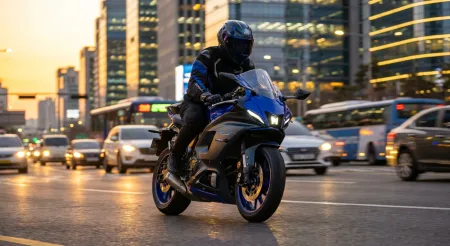
The MT-09 is a rocket, but it cooks your legs in heavy traffic. This phrase is no exaggeration; it is the raw reality for those seeking supersport performance in an environment it detests: gridlock in major Brazilian cities. Ever since it emerged to redefine the segment, the MT-09 has carried the Dark Side of Japan DNA and The Knight Horse concept, focusing on visceral riding that few can tame.
At the heart of it all is the CP3 engine, a three-cylinder motor that has practically earned a cult following among riders. It delivers an elasticity that makes you forget about shifting gears. However, in 2026, Brazilian riders face a dilemma: the machine is tempting, but official availability remains a roller coaster, leaving the dream of owning a brand-new bike in the hands of an uncertain market. If you think you're just going to commute from home to work, prepare to feel the engine heat on your thighs and understand why the MT-09 wasn't made for cruising, but for attacking the asphalt.
Spec Sheet Translated to the Asphalt: Brute Force and Electronics
When we talk about the 2026/2027 MT-09, we're not talking about catalog numbers, but a precision tool. With 119 hp and a brutal 9.5 kgfm (93 Nm) of torque, it doesn't just accelerate; it teleports you down the lane. The secret lies in the three-cylinder engine, which delivers a wallop right at 7,000 rpm. In practice, this means you have full power to pull away at a light or overtake without needing to downshift, but beware: torque delivery is so direct that without finely tuned electronics, the front wheel will want to lift off without your permission.
To better understand how this technology impacts your daily routine, check out our translated technical analysis:
Translated Spec Sheet
Yamaha MT-09 2026/2027
Engine & Performance
- Displacement & Architecture889 cc, Three-cylinder DOHC, 12VOn the Asphalt: Delivers brutal elasticity without needing to wring the engine's neck at traffic lights.
- Maximum Power119 hp at 10,000 rpmOn the Asphalt: Plenty of power to spare for instant highway overtaking.
- Maximum Torque9.5 kgf.m (93 Nm) at 7,000 rpmOn the Asphalt: Hard-hitting low-end acceleration; requires care with your right wrist to avoid unintended wheelies.
- Wet Weight193 kgOn the Asphalt: Light and nimble in hand, feeling like a 300cc bike during stationary maneuvers.
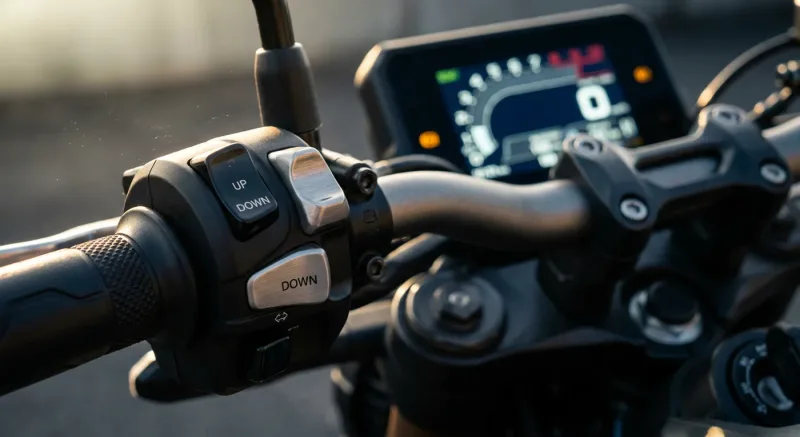
With an electronics package featuring a 6-axis IMU, the bike understands what you're doing better than you do. If you want to learn more about the evolution of this family, check out our analysis on the complete Yamaha MT lineup.
Real Fuel Consumption and Range: How Much Does It Cost to Ride in the City?
Let's be honest: no one buys an MT-09 worrying about fuel economy, but your wallet hurts when you realize its real range. In stop-and-go traffic that cooks your legs, fuel mileage drops drastically. If you're the kind of rider who abuses the torque at every green light, your average will plunge. Maintaining a smooth throttle and anticipating traffic is the only way to avoid living at gas stations.
| Usage Scenario | Real Fuel Consumption | Translation to Asphalt (Wallet Impact) |
|---|---|---|
| Heavy Urban (Stop and Go) | 16.5 km/l to 18.0 km/l | Uses fuel like an old 1.0L car if you accelerate hard at every light. |
| Fast Highway | 21.0 km/l to 23.5 km/l | Guarantees smooth cruising with an extended range close to 300 km. |
| Average Range (14L Tank) | 230 km to 310 km | Requires stopping at gas stations every 200 km for a safety margin in daily traffic. |
Remember: with a fuel tank of just 14 liters, a safety margin is vital. Never ride until the fuel light comes on, especially if you like pushing the engine hard. Protecting the submerged fuel pump is what separates simple routine maintenance from a massive expense at the end of the month.
Global Price vs. Grey Market: The Trap of Independent Importing
Looking at the MT-09 price in the United States ($10,899) or Europe (£9,810) and converting it to Reais is the fastest path to depression. In Brazil, expect prices between R$ 68,000 and R$ 78,000. Many fall into the temptation of the 'grey market', thinking they can import it on their own and save money. Spoiler: it's a trap.
Importing a brand-new motorcycle as an individual requires going through a tax nightmare: import duties and local taxes like II, IPI, PIS/COFINS, and ICMS can double the original price, accumulating up to a 100% tax burden. Furthermore, SISCOMEX bureaucracy, RADAR requirements, LCVM, and the nightmare of obtaining CAT approval make the process cost-prohibitive and risky. If you are considering financing or the actual purchasing viability, better understand the hidden traps when buying high-displacement motorcycles.
Transitioning to Reality: What to Expect in the Workshop and Lane Splitting?
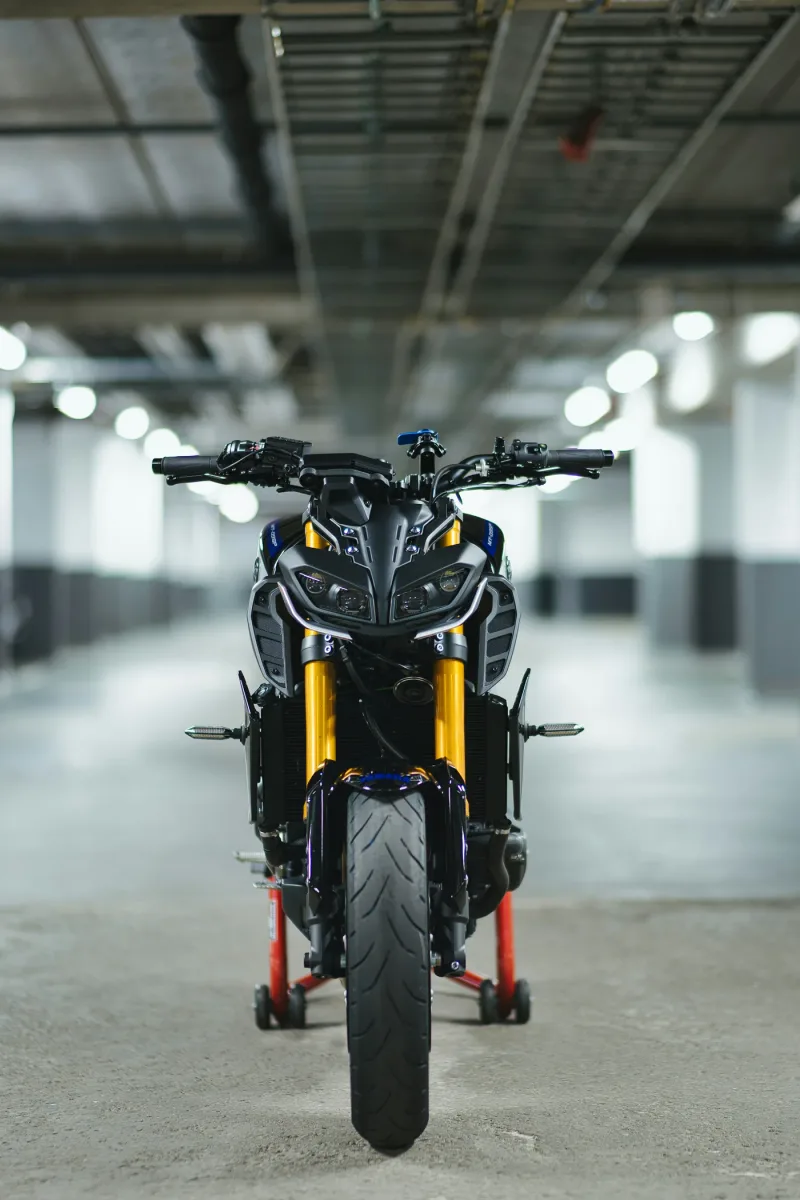
So far, we've seen that the MT-09 is a machine of brutal engineering, capable of delivering a riding thrill that few motorcycles match. But this performance comes at a cost, not only at the gas station, but also in importing bureaucracy and exclusivity in Brazilian garages. The power is seductive, but it hides daily challenges that go far beyond the spec sheet.
In the next section of our review, we're taking the MT-09 off its showroom pedestal and putting it into the real world of the mechanic's shop. Get ready: we're going to dissect the myth. We'll talk about legs burning in traffic jams, premature clutch basket wear keeping mechanics up at night, and why the suspension can be real punishment on poorly maintained streets. Is the sacrifice worth it? You decide.
The Dark Side of the CP3: Chronic Noises and Sensitive Transmission
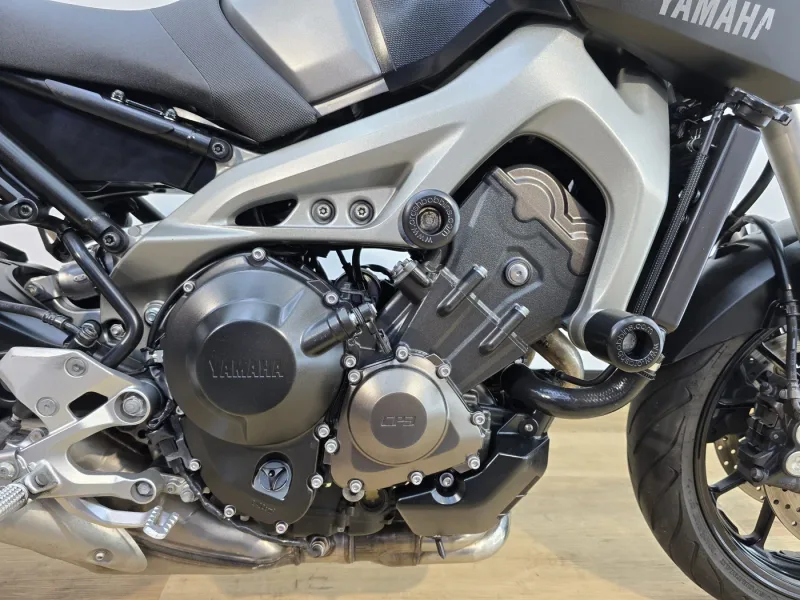
It's not all sunshine and roses in the life of an MT-09 owner. Although the CP3 engine is an engineering masterpiece, it isn't free of pain points. One of the most frequent reports in the community is the famous clutch basket rattle, that metallic, rhythmic noise that appears at idle. It stems from natural play in the clutch dampening springs, and while it doesn't always mean something will break tomorrow, it keeps perfectionists up at night.
The point requiring the most care daily is the gearbox, especially when abusing the 3rd generation Quickshifter. At very low revs or when attempting gear changes during repeated wheelies, the system can be harsh. Experienced mechanics have seen bent shift forks and premature wear on 2nd and 3rd gears due to unnecessary jolts. Keep in mind that to maintain gearbox health, preventive maintenance is your best insurance against costly repairs.
Fortunately, Yamaha has evolved significantly. Previously, the Ride-by-Wire throttle felt snatchy—like an on/off switch that made low-speed riding a constant struggle. With the introduction of the 6-axis IMU, throttle response became infinitely smoother and more progressive. To better understand the history of recalls and other critical points, be sure to read our article on chronic issues and factory care.
Leg Heat, Stiff Suspension, and Life in Urban Traffic Lanes
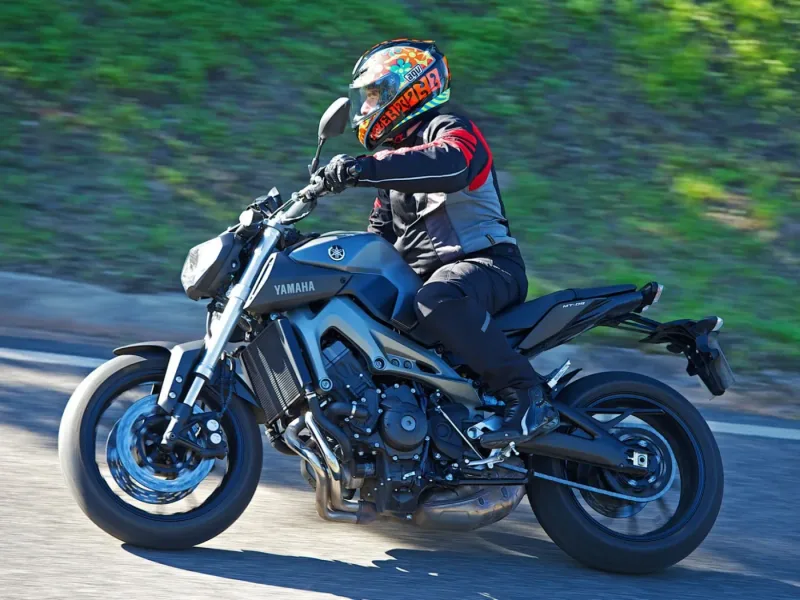
If you face gridlock in major Brazilian cities every day, prepare yourself: the 889cc engine is a walking heat generator. When speed drops below 20 km/h in stop-and-go traffic, the radiator fan kicks in and blows hot air directly onto your thighs and shins. No riding gear can 100% resolve this discomfort on hot summer days, making heavy traffic the biggest enemy of MT-09 comfort.
Added to that is the suspension. Yamaha calibrated the setup to be a true cornering machine, which means stiffness. On potholed or patched streets, you feel every road imperfection travel straight up your spine. The wide handlebars, which help lever the bike between cars, demand extra attention regarding the side mirror height of SUVs and trucks, which seem custom-made to hit the MT's bars.
👍 Strengths on the Asphalt
- Extreme Agility: The 193 kg weight and compact engine let it dodge potholes and cars like a smaller bike.
- Power to Spare: Blistering launches to clear out ahead of distracted drivers at traffic lights.
- Y-AMT Technology (Option): Eliminates forearm fatigue in heavy traffic by removing the clutch lever.
👎 Daily Weaknesses
- Intense Leg Heat: The fan blows hot air directly onto thighs and shins in traffic jams.
- Stiff Suspension: Sporty tuning transfers bumps from rough pavement straight to your spine.
- Limited Turning Radius: Requires more maneuvering in tight spots between stationary cars.
Workshop Spotlight: Parts Costs, Oil Changes, and Maintenance
When it comes to maintenance, the CP3 engine is legendary for its durability, easily surpassing the 100,000 km mark if well maintained. However, the golden rule here is oil changes. Always use the manufacturer-recommended synthetic lubricant every 5,000 km. This oil isn't just for the engine; it plays a vital role in protecting the clutch assembly and transmission precision. Skipping this interval opens the door to expensive mechanical troubles.
Another critical point is replacement parts. While filters and brake pads are easy to find on the market, the story changes when cosmetic or electronic components are needed. If you require fairings, an LED headlight, or any specific SP version part (such as Öhlins components or Brembo calipers), waiting times can be frustrating. In many cases, importing can take 30 to 60 days, leaving the bike stranded in the shop.
Workshop Spotlight: The CP3 engine is legendary and easily surpasses 100,000 km, but demands synthetic oil changes every 5,000 km to protect the transmission. If you need bodywork, LED headlights, or SP version electronic components, brace your wallet and patience: official dealership wait times can take 30 to 60 days.
MT-09 vs. Competitors: Z900, Street Triple RS, and KTM 990 Duke R
The MT-09 plays in a league of giants. The Kawasaki Z900, for example, is the most rational choice: its 4-cylinder engine is smooth as silk and maintenance is generally the cheapest in the category. However, it is significantly heavier (around 210 kg), which takes away some of the frantic agility the MT-09 delivers. If you want comfort and predictability, the Z900 is the way to go.
On the other hand, the Triumph Street Triple RS is for those seeking surgical precision on track days. It is the lightest in the group (188 kg), but you pay the price with replacement parts that cost a fortune. The KTM 990 Duke R, meanwhile, is a monster with 103 Nm of torque. It is the rawest of them all, but requires an owner willing to spend heavily on both purchase and maintenance, given the limited KTM dealer network.
In the end, the MT-09 wins on balance between performance, on-board tech, and resale market liquidity. If you want a more detailed technical comparison of how they stack up on paper, check out our complete premium naked bikes guide.
Unfiltered Verdict: Is It Worth the Risk and Every Penny?
Let's get straight to the point: the MT-09 is not a bike for those seeking peace and comfort in urban traffic. If your commute is 100% focused on getting to work through heavy gridlock, the heat on your legs and the firm suspension will exact a high toll. However, if you want a machine that makes you smile every time you twist the throttle, boasting one of the most charismatic engines ever built and cutting-edge electronics keeping you grounded, the MT-09 is unbeatable.
It requires accepting its quirks: strict oil changes, patience with imported parts, and mindful clutch care. In return, you get one of the purest and most entertaining riding experiences in the 2026 market. The remaining question is: are you the type who prefers the user-friendly comfort of a 4-cylinder naked, or do you love feeling the raw torque of the CP3, even if it means sweating a little in traffic?
What about you? Would you face daily traffic on an MT-09, or do you prefer something less aggressive for everyday riding? Leave a comment below at 'Moto na Prática' and let's discuss it unfiltered!
Tags:Reviewsyamaha mt 09mt09 2026 reviewmt09 specsmt09 fuel consumptionmt09 grey marketmt09 chronic problems
Recommended Posts
Comentários (0)
Participe da discussão
Faça login ou cadastre-se rapidamente para enviar seu comentário. É simples e leva menos de 1 minuto!
Nenhum comentário por enquanto. Seja o primeiro a opinar!